#001
Bulbasaur



Seed PokémonGen 1
It carries a seed on its back right from birth. As its body grows larger, the seed does too.


312 Entries
Explore the Pokopia Pokédex with all Pokémon species, their habitats, specialties, and roles in the game's systems. Learn how to befriend Pokémon, where they spawn, and how their abilities affect gameplay.
Want a practical route from target to action? Start with Capture Path Planner and keep your session focused with Goal Checklist.
Mar 25, 2026
312 entries total; showing 20
It carries a seed on its back right from birth. As its body grows larger, the seed does too.

The buld on its back grows as it absorbs nutrients. The bulb gives off a pleasant aroma when it blooms

By spreading the broad petals of its flower and catching the sun's rays, it fills its body with power.


If Charmander is healthy, the flame on the tip of its tail will burn vigorously and won't go out even if it gets a bit wet.

It is very hotheaded in nature, so it constantly seeks opponents to battle against. Its aggression will not be quelled if it doesn't win.


When this Pokemon expels a blast of superhot fire, the red flame at the tip of its tail burns more intensely.


Shoots water at prey while in the water. Withdraws into its shell when in danger.

It often hides in water to stalk unwary prey. While swimming quickly, it moves its ears to maintain balance.

It has jet nozzles on its shell. This impressive Pokemon uses these jets to charge toward foes with all the force of a rocket.

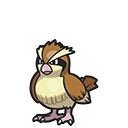
Very docile. If attacked, it will often kick up sand to protect itself rather than fight back.
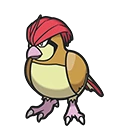
This Pokemon is full of vitality. It constantly flies around its large territory in search of prey.
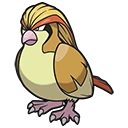
It spreads its gorgeous wings widely to intimidate enemies. It races through the skies at Mach-2 speed.

Its scientific name is Oddium wanderus. It is said to cover distances as far as 1,000 feet when night falls, walking on its two roots.

The nectar it drools from its mouth smells so atrocious that it can make noses curl from more than a mile away.

It has the world's largest petals. With every step, the petals shake out heavy clouds of toxic pollen.

Plentiful in the tropics. When it dances, its petals rub together and make a pleasant ringing sound.


Burrows under the ground to gnaw on tree roots. The mushrooms on its back absorb most of the nutrition.

The bug host is drained of energy by the mushroom on its back. The mushroom appears to do all the thinking.

Its large eyes act as radar. In a bright place, you can see that they are clusters of many tiny eyes.
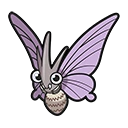
The wings are covered with dustlike scales. Every time it flaps its wings, it looses highly toxic dust.
How Pokémon, habitats, specialties, and befriending connect within the Pokopia Pokédex.
The Pokopia Pokédex is a comprehensive database of Pokémon found in Pokémon Pokopia.
Each entry includes habitat requirements, how to befriend them, and their specialty effects in gameplay.
Unlike a traditional Pokédex, it emphasizes functional roles and interaction mechanics.
In Pokopia, Pokémon appear in specific habitats that you build and customize.
Habitats determine which Pokémon can spawn and under what conditions (time of day, environment, weather).
Players often refer to the Habitat Dex to plan where to attract specific Pokémon.
Specialties are job-like functions that Pokémon can perform once befriended.
For example:
These specialties affect progression and how players manage resources and habitats.
To add a Pokémon to your Pokédex, you must build its required habitat and interact with it.
Different Pokémon have unique habitat requirements and may only spawn in specific areas.
Players often experiment with habitat placement to find and befriend rare Pokémon.
The Pokopia Pokédex is a database of all Pokémon species, including their habitats, specialties, and gameplay roles.
Pokémon can be obtained by building the correct habitat and meeting their spawn conditions.
Specialties define each Pokémon’s function, such as gathering, building, or supporting gameplay systems.
Pokémon appear in specific habitats, and their spawn depends on environmental conditions and habitat setup.
Yes. Each Pokémon has a specialty that determines its role in gameplay interactions and progression.
The Pokédex includes additional system data such as habitats, specialties, and gameplay functions, not just species names.